
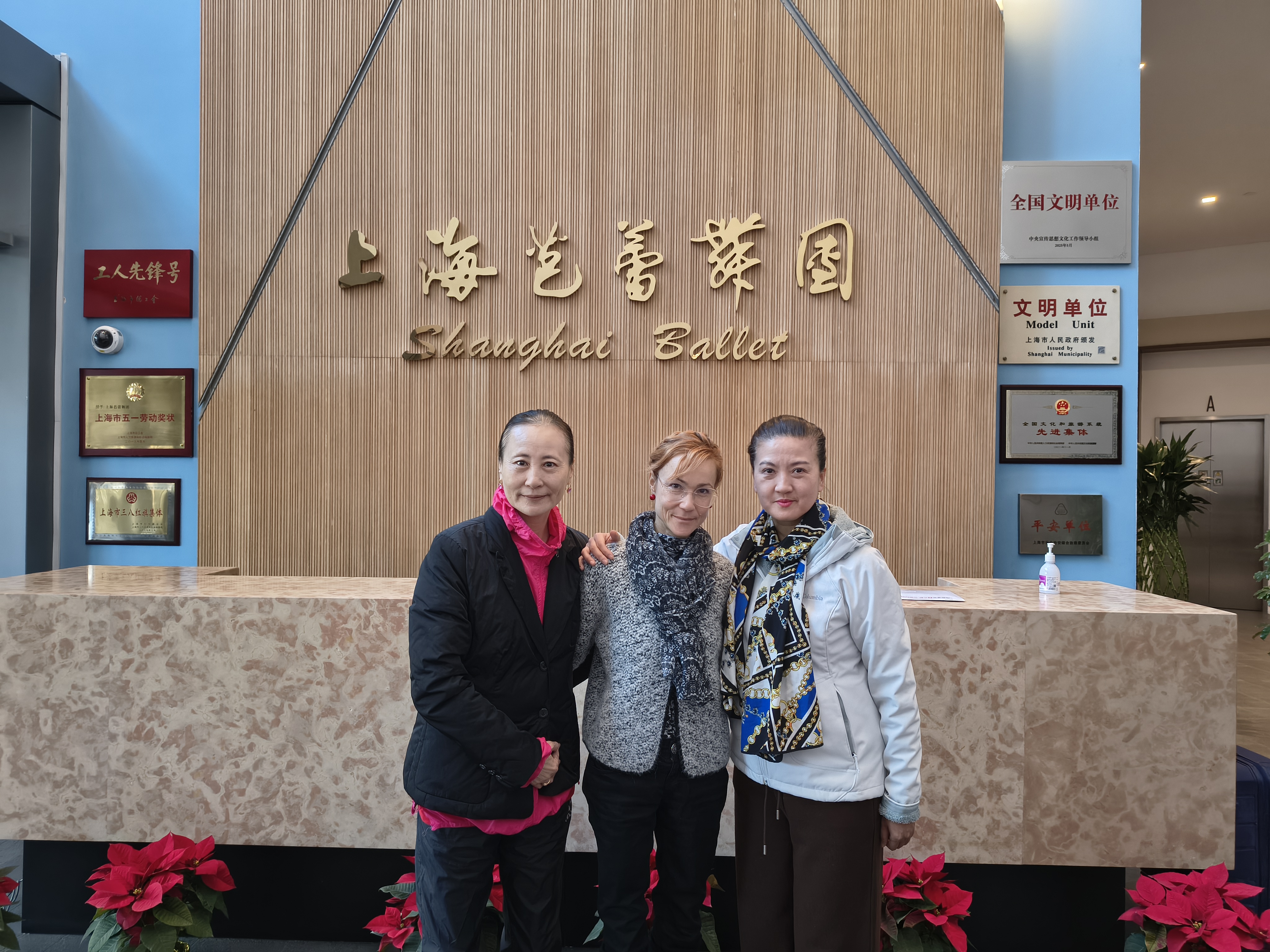
In the final days of the previous year, at the invitation of the organizers of the Eurasia Grand Prix, Virág Sóthy visited China and acted as a jury member of the prestigious competition.
She is an associate professor at the Hungarian Dance University (HDU) and the editor-in-chief of the journal Dance Art. This significant professional opportunity marks the first milestone of the cooperation agreement between the Eurasia Grand Prix and the Budapest Ballet Grand Prix (BBGP), representing an important step for the Hungarian Dance University and its ballet competition, the BBGP, as well.
The Eurasia Grand Prix took place on December 28, 2025, in Suzhou, the “Venice of the East” (although, despite the name, residents of Bangkok would presumably object).
The Eurasia Grand Prix and the Budapest Ballet Grand Prix signed a cooperation agreement last December, ensuring that selected participants from each competition can demonstrate their skills at both events—an initiative that is also significant in terms of broadening cultural relations between the two countries. In this spirit, the grand prize winner of the Eurasia Grand Prix, the Chinese dancer Zhong Xuechen, was given the opportunity to join the training programme of the Hungarian Dance University and was also selected to compete in the 2026 Budapest Ballet Grand Prix.
In 2025, the competition was held for the second time, following Shanghai, this time in Suzhou, located at the mouth of the Yangtze River, a city that is home to a renowned ballet company. According to Virág Sóthy, the organizers’ long-term vision is to host the competition in major Chinese cities, with the aim of making the Eurasia Grand Prix a widely known and recognized event. An additional important consideration is the involvement of local dance academies and schools in each host city.
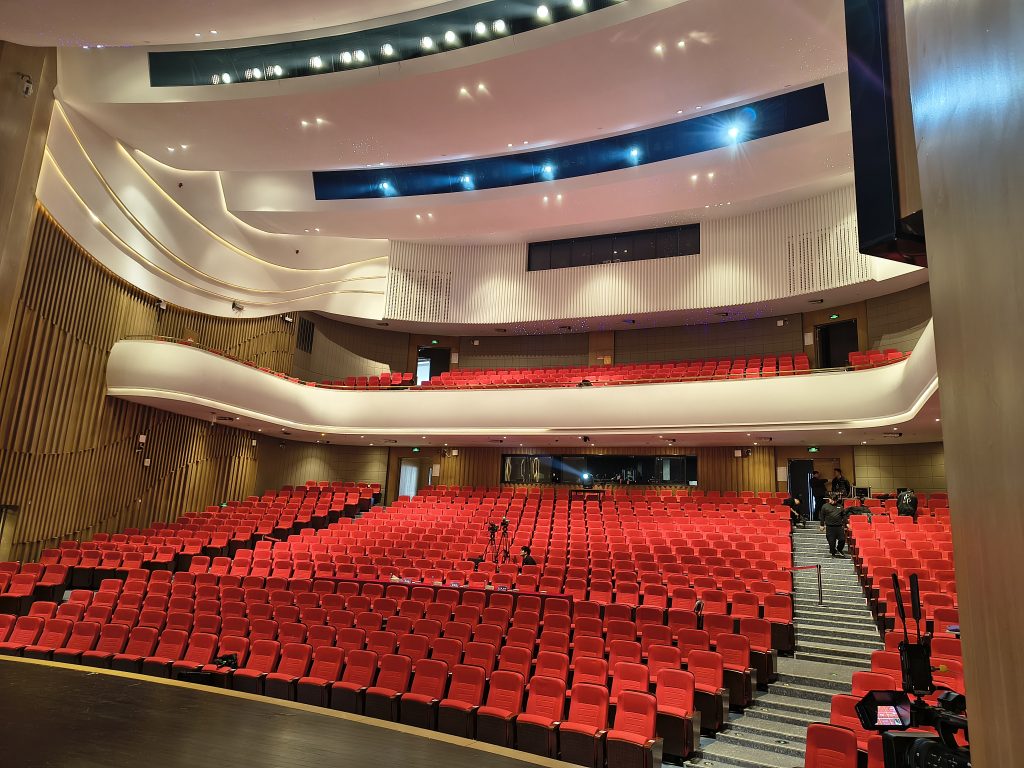
Two hundred competitors took part in the 2025 Eurasia Grand Prix. The Hungarian Dance University lecturer summarized the event as follows:
“The first part of the competition focused on Chinese classical dance, which reflects elements of traditional Chinese culture and philosophy. Artistic traditions such as Taoism, Buddhism, and Confucianism frequently appear in these dances. In China, training in this style begins at a very young age, and the competitors represented a wide range of age groups. Personally, it was a great experience for me to see the beautiful, colourful costumes and the dancers’ meticulously refined movements, which expressed a variety of emotions and stories. At the heart of these dances lies the precise control of every small part of the body, and it was astonishing to witness the level of self-discipline, body awareness, and control that dancers acquire at such a young age.
The second part of the competition was devoted to ballet, where participants performed variations from the classical ballet repertoire that are also well known in Europe. The high standard of the competition is reflected in the fact that directors of world-renowned companies accepted the invitation to be jury members. It was a great honour that the artistic director invited me to visit her company the following day as well.”
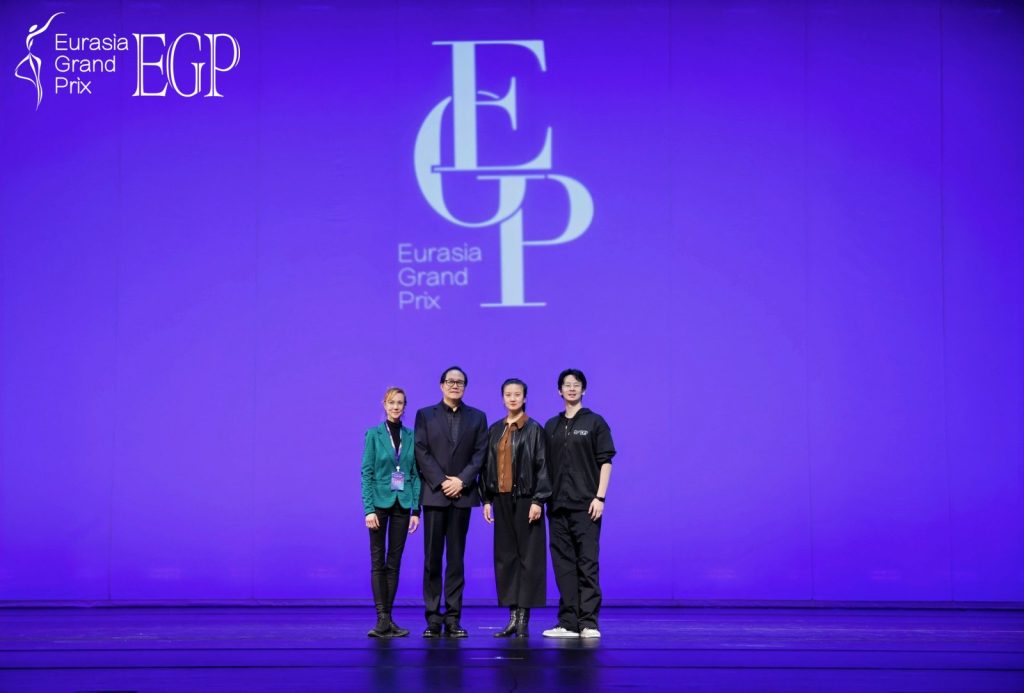
Photos by EGP
The jury included Ji Pingping, Director of the Shanghai Ballet; Wang Quanxing, Director of the Suzhou Ballet Theatre; and Weng Yaosheng, Professor at the Shanghai Theatre Academy, as well as Virág Sóthy. During the event, she was also given the opportunity to present the Hungarian Dance University to both the audience and the participants. This was particularly important, as the Hungarian Dance University’s long-term goal is to welcome talented Chinese students into its programmes who wish to continue their studies in Europe.
These developments marked the beginning of an outstanding professional partnership in China at the end of December, one that is significant not only for the Hungarian Dance University and its Chinese partner, but also for the wider cultural relations between the two countries.